




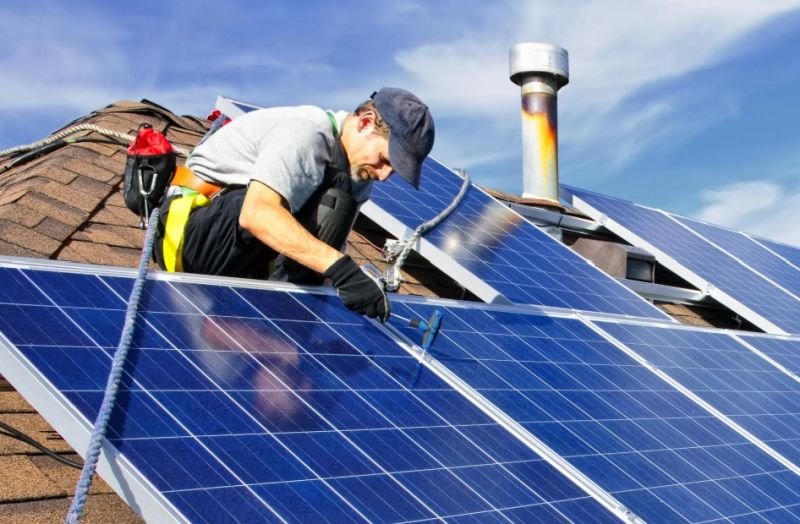
LUCKNOW: Uttar Pradesh is entering a decisive phase in its transition towards solar energy. With electricity demand rising, pressure on the power grid increasing and the cost of conventional generation remaining a long-term concern, efficient utilisation of the state’s abundant solar potential could have implications far beyond electricity generation. It can reduce household power costs, strengthen agricultural incomes, create employment, support industry and improve the state’s overall energy security.
The scale of Uttar Pradesh’s electricity requirement makes this particularly important. According to the Central Electricity Authority’s projections reported by Hindustan Times, UP’s peak power demand is expected to touch 33,033 MW during 2026-27, while annual energy requirements are projected at 1,69,945 million units. Solar generation, particularly when located close to consumers, can help meet a portion of this growing demand during daylight hours.
Rooftops can transform the power equation
One of the most immediate opportunities lies on the rooftops of homes, commercial establishments, schools, government buildings and factories. Uttar Pradesh has already demonstrated that large-scale rooftop adoption is possible.
Times of India reported in June 2026 that residential rooftop solar capacity in UP had crossed 2 GW. A subsequent report said the state had installed 71,888 residential systems in June alone—the highest monthly figure recorded by any state under the PM Surya Ghar Muft Bijli Yojana.
The benefits are not restricted to electricity generation. Rooftop systems can reduce household electricity expenditure while producing power at the point of consumption. In Lucknow, Hindustan Times reported that rooftop solar was already generating about 328 MW, equivalent to roughly a fifth of the city’s electricity demand at the time of the report.
For a state with millions of households, even moderate expansion could therefore reduce pressure on distribution networks and conventional generation during daytime demand periods.
Agriculture could become another major beneficiary
Solarisation of agriculture could have an equally significant impact. Uttar Pradesh has a huge irrigation requirement, and replacing diesel-powered pumps or conventional grid-powered agricultural pumps with solar systems can reduce farmers’ recurring energy costs.
The state’s solar policy specifically provides for solarisation of agricultural feeders and pumps under PM-KUSUM. Times of India reported that Prayagraj district achieved its PM-KUSUM target for 2025-26, with farmers receiving substantial financial support for solar installations and opportunities to sell surplus electricity to distribution companies.
Efficient solar irrigation can also provide farmers with greater control over irrigation schedules, while reducing dependence on diesel and improving the predictability of farm operations.
Solar can become an economic and employment engine
Solar expansion is also creating a new ecosystem of installers, equipment suppliers, financiers, technicians and service providers. Hindustan Times reported in June that more than 6,000 registered vendors were supporting UP’s rooftop expansion, while Times of India reported that more than 7,000 companies and vendors were involved in the sector and that the rooftop industry was supporting more than 80,000 direct and indirect jobs.
The opportunity therefore extends beyond power generation to local manufacturing, installation, maintenance, finance, digital monitoring and technical training. Read more..
