




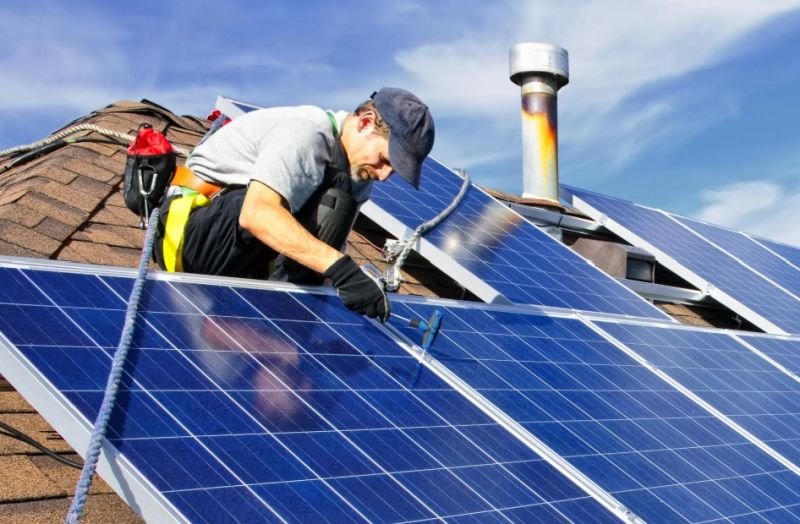
Individuals and businesses planning to install rooftop solar systems could see higher project costs beginning June 1, following the implementation of a significant policy change in India’s solar energy sector.
The government has now made it mandatory for certain solar projects to use solar cells manufactured within India. The decision is aimed at strengthening domestic manufacturing capabilities and reducing the country’s reliance on imported components, particularly those sourced from China. While the move supports India’s long-term clean energy and self-reliance goals, it is expected to create short-term challenges for consumers and industry stakeholders.
## New Rule Explained
Solar panels are made through a multi-step manufacturing process. It begins with polysilicon, which is converted into ingots and wafers. These wafers are then transformed into solar cells that generate electricity from sunlight. Multiple solar cells are combined to create solar modules, commonly known as solar panels.
Until now, India required developers to use domestically manufactured solar modules for specific projects. However, from June 1 onwards, the policy has been expanded. The solar cells inside these modules must also be sourced from approved Indian manufacturers listed under the government’s Approved List of Models and Manufacturers (ALMM) List-II.
The regulation applies to rooftop solar systems installed under net-metering arrangements, including projects covered by the PM Surya Ghar: Muft Bijli Yojana. Open-access solar projects used by commercial and industrial consumers are also covered under the new requirement.
Despite requests from industry players seeking additional time to comply, the government has decided to proceed without granting a broad extension.
## Purpose Behind the Policy
The government’s primary objective is to develop a complete domestic solar manufacturing ecosystem.
Although India has built an impressive annual solar module manufacturing capacity of nearly 200 GW, its solar cell manufacturing capacity remains significantly lower at approximately 30 GW. As a result, many modules assembled in India continue to rely on imported cells, with China being the dominant supplier.
By mandating the use of locally produced cells, policymakers hope to encourage fresh investments in solar cell production, enhance energy security, and reduce dependence on foreign supply chains.
## Impact on Consumers
For consumers, the most noticeable effect is likely to be an increase in installation costs.
Industry estimates suggest that rooftop solar systems may become around Rs 3,000 more expensive per kilowatt. This is largely because domestically manufactured solar cells currently cost more than imported alternatives.
For example, a standard 5-kW residential solar installation could cost approximately Rs 15,000 more under the new framework. Some experts believe prices could rise further if domestic production struggles to keep pace with demand.
Homeowners participating in the PM Surya Ghar scheme will continue to receive government subsidies. However, compliance procedures and verification requirements may become more rigorous as authorities ensure adherence to the new sourcing norms.
Even with higher upfront costs, solar energy remains an attractive long-term investment due to ongoing savings on electricity bills over the system’s lifetime.
## Industry Concerns Over Supply Availability
A key concern within the solar sector is the gap between domestic demand and manufacturing capacity.
Current estimates place India’s annual demand for solar cells at around 50 GW, while domestic production capacity stands at only 25-30 GW. Historically, more than 90 percent of the country’s solar cell requirements have been met through imports.
This imbalance raises concerns about potential shortages and supply bottlenecks.
Standalone solar module manufacturers are particularly vulnerable because they depend on purchasing cells from larger integrated companies that manufacture both cells and modules. Many industry participants worry that limited supplies could create an uneven competitive environment.
With demand expected to rise sharply under the new regulations, domestic cell manufacturers may gain considerable pricing power. Some industry estimates suggest margins currently range between 20 and 30 percent and could increase further if supply constraints persist.
## Challenges for Smaller Manufacturers
Smaller manufacturers and related businesses may face the greatest pressure from the transition.
Industry sources indicate that more than 125 module manufacturers, along with numerous supporting enterprises, could be affected if cell availability remains limited.
The cost difference between modules made with domestic cells and those using imported cells has already widened in recent months. At the same time, many module assembly plants are reportedly operating at only 30 to 40 percent capacity, reflecting weak demand and excess production capability.
Under these conditions, the mandatory sourcing requirement could intensify financial pressures and accelerate industry consolidation, with larger integrated manufacturers potentially gaining a greater share of the market.
## Supporters See Long-Term Benefits
Not everyone in the industry views the policy negatively.
Many manufacturers have welcomed the government’s decision, arguing that temporary disruptions are necessary to establish a strong and competitive domestic solar industry.
According to Pawan Kumar Garg, Founder and Joint Managing Director of Fujiyama Power Systems, short-term challenges related to cell availability and pricing are likely, but the long-term advantages outweigh the immediate difficulties. He believes the policy will stimulate domestic solar cell production, strengthen energy security, and support India’s ambition of becoming a globally competitive solar manufacturing hub.
Supporters also point out that utility-scale solar projects awarded before August 31, 2025, have been exempted from the domestic cell sourcing requirement. This exemption is expected to ease some pressure on current supplies.
For many industry advocates, the policy provides the confidence needed to justify large-scale investments in local manufacturing facilities. While the transition may create temporary challenges, they argue it is a necessary step toward building a self-sufficient and resilient solar energy sector in India.
